Continuously Identify, Validate, and Prioritize Exposures
Continuous Threat Exposure Management (CTEM), Operationalized
Implementing CTEM at Scale
The Challenges of CTEM, and What It Takes to Power It

What Is CTEM, and How Do You Actually Implement It?
Continuous Threat Exposure Management (CTEM) is a five-stage framework, scoping, discovery, prioritization, validation, and mobilization, that shifts security teams from periodic scanning to ongoing risk reduction. Instead of chasing every flagged issue, teams focus on what's actually exploitable and business-critical.

The Brinqa Solution
How Brinqa Powers a CTEM Strategy

The Brinqa Solution
How Brinqa Powers a CTEM Strategy
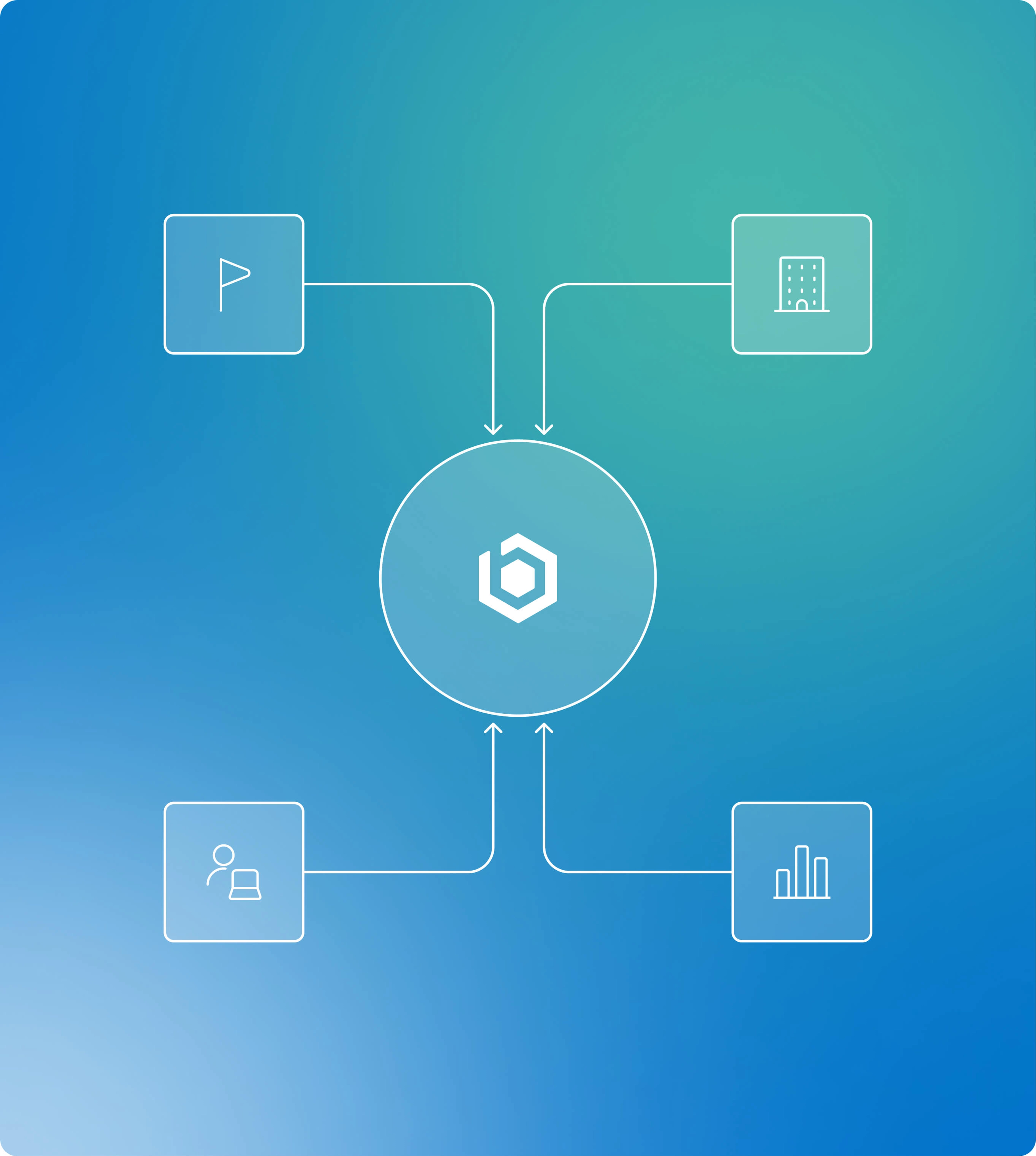
Brinqa operationalizes CTEM by connecting the tools teams already use into a single, data-driven platform. With 300+ out-of-the-box integrations, Brinqa brings together asset, vulnerability, threat, and business data to give teams deeper visibility, richer context, and a clearer view of real exposure.
By using more of this data—not just isolated findings—Brinqa correlates signals across sources to support better decisions and faster, more targeted remediation. Teams maximize the value of existing security investments while moving CTEM from a framework into a repeatable, scalable practice.
How Brinqa Works
How Brinqa Supports Each Stage of CTEM
Scoping defines what needs protection, and discovery finds the exposures affecting it. Brinqa’s Data Layer ingests and correlates exposure data across your environment, and the CyberRisk Graph™ maintains the asset inventory and relationship mapping that make accurate scoping and continuous discovery possible.
Validation confirms that remediation actually reduced risk. Brinqa checks each fix against the latest results from connected scanners and testing tools, while PlexTrac by Brinqa tracks retest results from penetration tests and red team exercises, so every closed exposure has evidence the fix held.
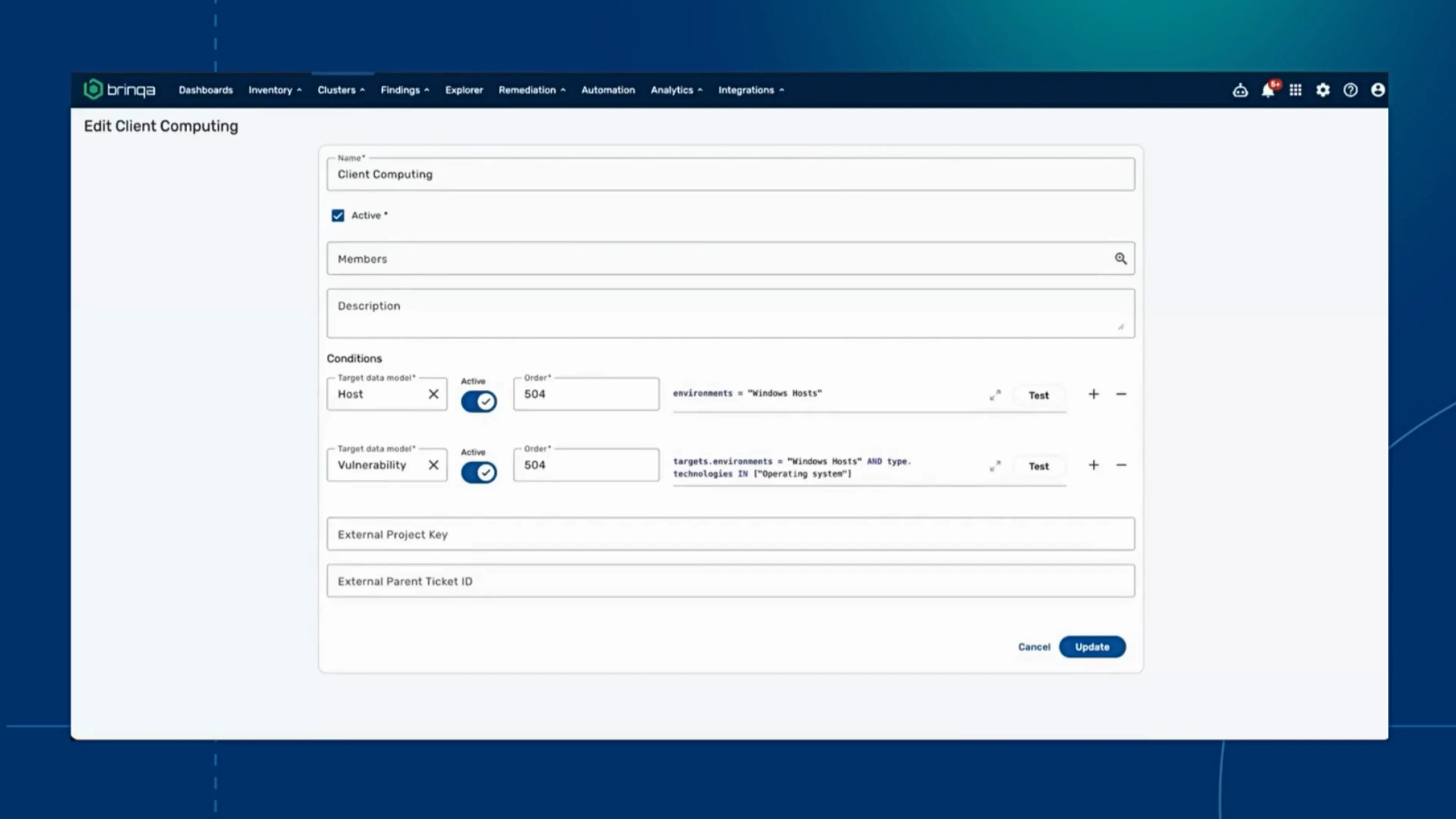
Identify & Target Remediation Owners
See how Brinqa operationalizes mobilization
Watch how Brinqa automatically assigns remediation ownership at the layer level — turning CTEM’s mobilization stage into coordinated action across teams.
Why Brinqa
Discover Key Features That Deliver an Enterprise Level Strategic Edge
Understanding CTEM
CTEM, Explained
CTEM brings structure and continuity to how organizations manage exposure, turning fragmented security data into continuous, prioritized action.

- Scope → define what to evaluate
- Discover → identify vulnerabilities and exposures
- Prioritize → focus on real risk, not just severity
- Validate → confirm what’s actually exploitable and prove the fix held
- Mobilize → drive and track remediation
Result: Continuous, risk-driven reduction—not periodic assessment.
Vulnerability management identifies weaknesses. CTEM ensures those weaknesses are continuously evaluated, validated, and acted on based on real-world risk.
Security teams are overwhelmed with data and lacking clarity. CTEM reduces noise and focuses attention on what actually needs to be fixed first.
See full comparison: CTEM vs Vulnerability Management vs Exposure Management
Customer Success Stories
Proven Enterprise Outcomes
Brinqa at Work
Solutions For Every Member of Your Vulnerability Management Program
CISOs and security risk leaders

Exposure and risk management teams

Security Operations Teams

CTEM FAQs:
CTEM (Continuous Threat Exposure Management) is a framework for continuously identifying, prioritizing, and reducing security exposure based on real-world risk.
Vulnerability management identifies security weaknesses, while CTEM continuously evaluates and prioritizes those weaknesses based on exploitability and impact.
CTEM includes five stages: scope, discover, prioritize, validate, and mobilize.
CTEM vendors usually specialize in one or two of the five stages. Scanners and attack surface tools cover discovery, exposure management platforms cover prioritization and mobilization, and validation vendors run breach simulation or penetration testing. Brinqa covers scoping, discovery, prioritization and mobilization, and PlexTrac by Brinqa adds validation, so teams can confirm exposures are exploitable and that fixes hold.
At scoping and discovery, a CTEM platform should unify asset and exposure data from every tool into one trusted inventory. At prioritization, it should rank exposures by exploitability and business impact. At validation, it should confirm what attackers can actually reach. At mobilization, it should route each exposure to a verified owner and track remediation to closure.
CISOs report CTEM progress in business terms rather than finding counts. Useful measures include exposure reduction on critical business services, mean time to remediate by risk tier, SLA compliance, and the share of exposures with a verified owner. Reporting trends across CTEM cycles shows the board whether risk is going down and where attention is still needed.
Whitepaper/Guide
The CTEM Practitioner's Guide