Unified Exposure Management
See How the Brinqa Platform Works
Every scanner, every cloud environment, every ticketing system produces data. The problem isn't having too much of it, it's that most of it is fragmented, duplicated, and disconnected from the risks that actually matter. See how Brinqa changes that.
The Problem
The data isn't the problem. It's what gets lost inside it.

The Problem
The data isn't the problem. It's what gets lost inside it.
In most enterprise environments, more than 78% of assets have no defined owner.* The same finding gets reported five different ways across three different tools. Security teams spend hours reconciling what is fundamentally the same issue. That's not security work. That's spreadsheet archaeology.
The risk is real. The accountability isn't.
The Solution
A program built to operate inside the chaos, not around it.
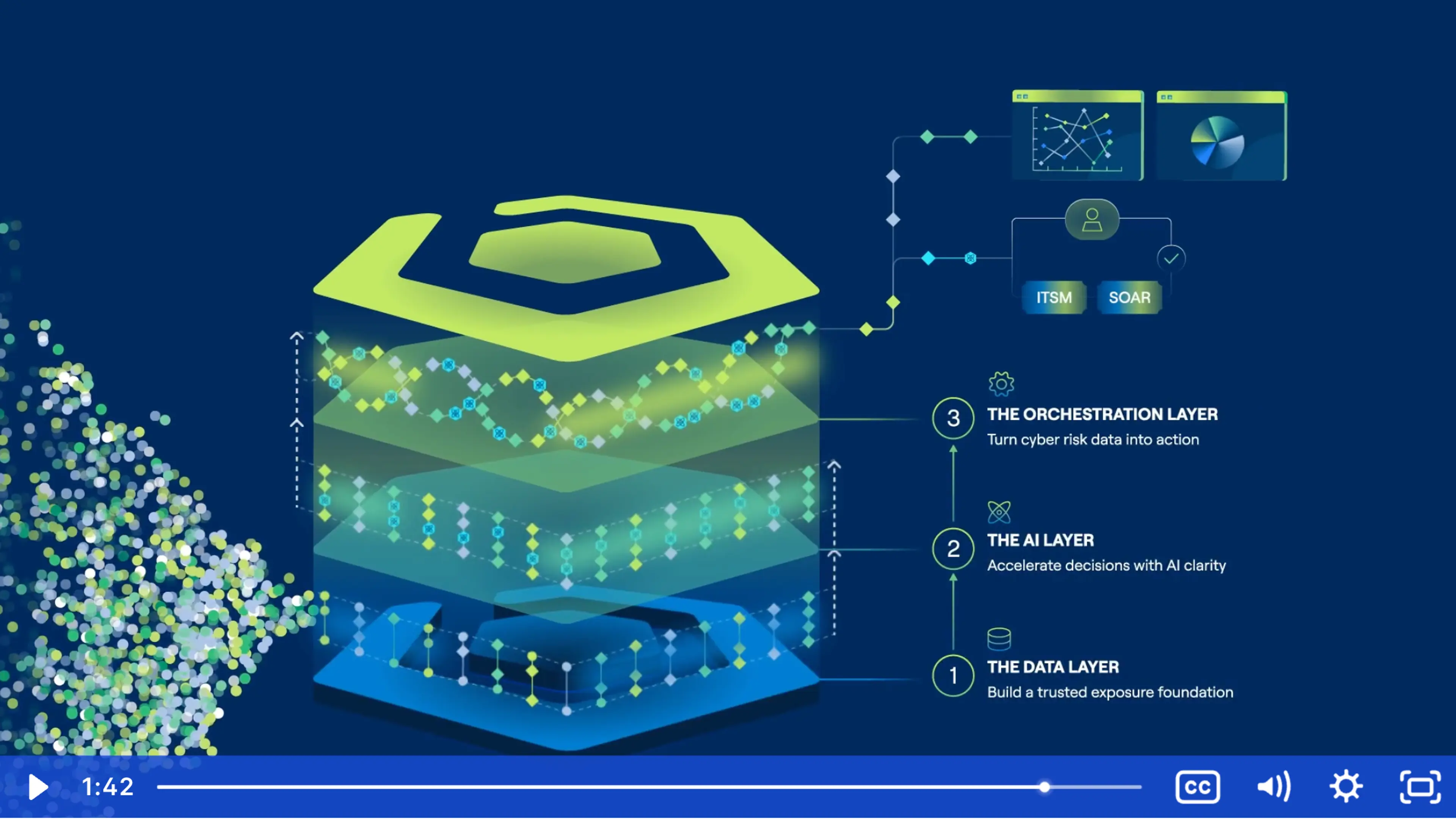
The answer to exposure management chaos isn't more dashboards or more tools. It's a platform that can ingest every signal, normalize the noise, establish ownership, and act — automatically, at scale, without losing the context that makes prioritization meaningful. That's what Brinqa does.

Deduplicate at scale
Thousands of overlapping findings collapse into single, actionable records — so your team is working the real list, not an inflated one.

Establish ownership automatically
Every risk finds an owner. No manual triage. No guesswork. AI-driven attribution connects findings to the right teams from the start.

Prioritize by what matters to the business
Cyber risk prioritization grounded in confirmed exploitability and business impact, not CVSS scores alone.

Take action without writing code
SmartFlows puts automation in your team's hands. Build, modify, and run remediation workflows visually. Your rules. Your logic.
Customer Outcomes
What Smart Chaos looks like in practice:
When exposure data is clean, correlated, and actionable, the numbers move. Here's what that looks like for Brinqa customers.
80% reduction in unassigned vulnerabilities (Nestlé Customer Case Study)
97%of risks mapped to an owner (Fortune 500 Tech Company Case Study)
2–3x improvement in vulnerability management productivity (SAP Customer Case Study)
FAQs
Unified exposure management is the practice of consolidating vulnerability findings, asset context, threat intelligence, and business risk data into a single, correlated view — so security teams can prioritize and remediate based on actual exposure, not scanner output.
Traditional vulnerability management produces lists. Unified exposure management produces decisions — because it incorporates asset ownership, threat intelligence, and business context that scanner output alone can't provide. Fragmented tools surface volume; a unified platform surfaces what deserves attention and routes it to the people accountable for fixing it.
Brinqa is a unified exposure management platform built for complex enterprise environments. Its Cyber Risk Graph™ normalizes and contextualizes findings from every security tool — scanners, cloud platforms, EDR systems, ticketing workflows — and uses AI-driven agents to deduplicate findings, assign ownership, and automate remediation at scale.
This is the foundation of a continuous threat exposure management (CTEM) program: not just identifying exposure, but operationalizing a cycle of assessment, prioritization, and action that reduces risk over time.
Vulnerability management focuses on identifying and patching known vulnerabilities, typically by scanner output. Exposure management is broader: it incorporates asset ownership, threat intelligence, business context, and attack path analysis to determine which exposures pose real risk to the organization. The shift from vulnerability management to exposure management is a shift from lists to decisions.
Continuous threat exposure management (CTEM) is a security program framework — defined by Gartner — that structures the ongoing process of scoping, discovering, prioritizing, validating, and mobilizing remediation of exposures. A CTEM program requires a platform that can normalize data across tools, establish accountability, and automate remediation workflows at enterprise scale.
Brinqa is a unified exposure management platform purpose-built for complex enterprise environments. Its Cyber Risk Graph™ ingests and normalizes data from every security tool — scanners, cloud platforms, EDR systems — and applies AI-driven deduplication, asset attribution, and automated remediation to reduce exposure at scale. Brinqa supports continuous threat exposure management (CTEM) programs across a range of enterprise verticals.
Brinqa prioritizes vulnerabilities by correlating exposure data with confirmed exploitability, threat intelligence, and business context — not CVSS severity alone. This means security teams focus on the findings with the highest actual impact to the organization, rather than the longest list of findings by score. The result is fewer things screaming for attention and more confidence in what gets fixed first.
The Cyber Risk Graph™ is the data model at the core of the Brinqa platform. It ingests findings from every connected security tool, normalizes and deduplicates them, and maintains every relationship between assets, findings, owners, and business context. Every prioritization decision, remediation workflow, and risk report in Brinqa is built on the Cyber Risk Graph — ensuring recommendations are traceable and trustworthy.