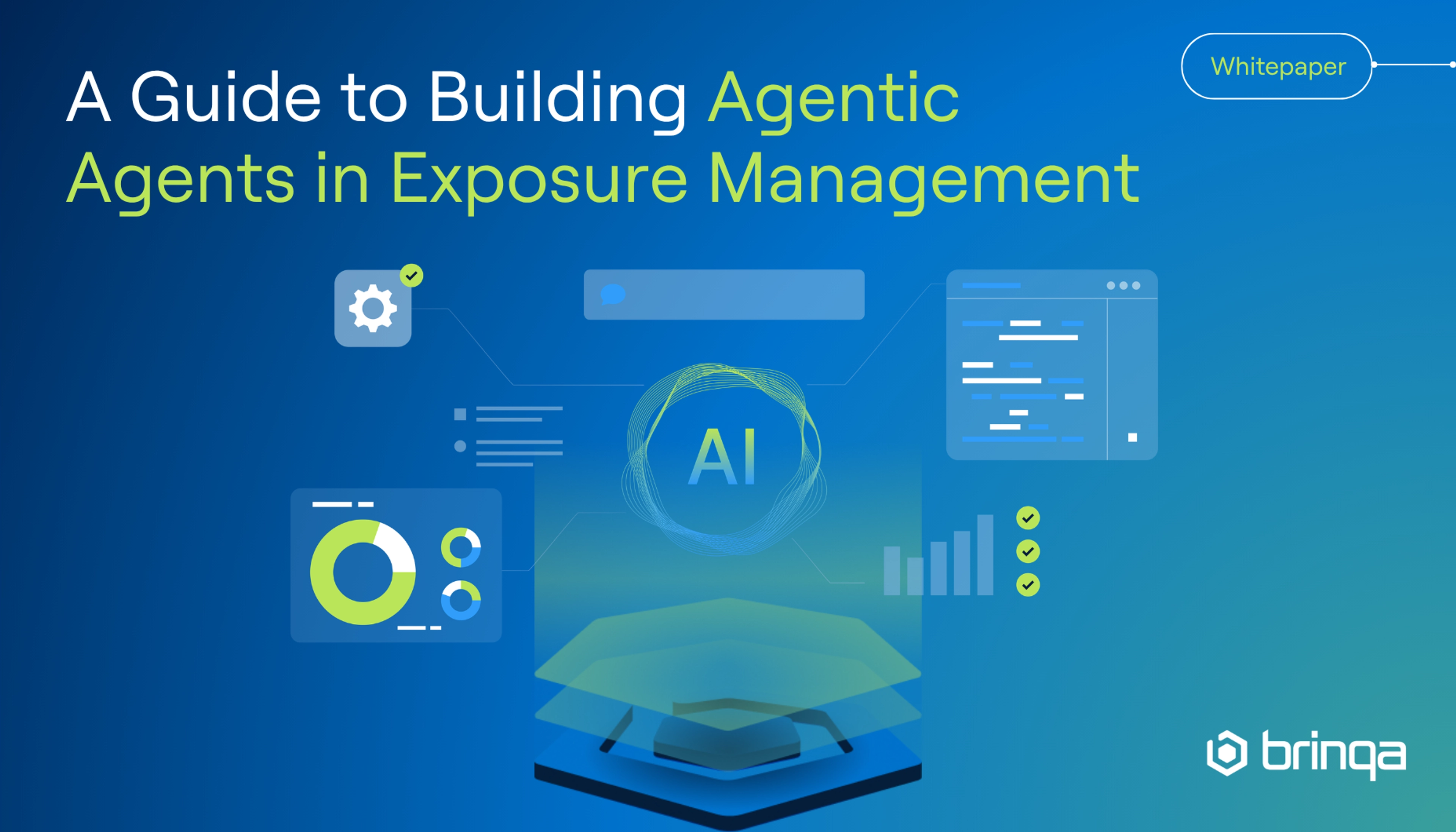
Why Agentic Security Programs Stall — and What Moves Them to Production
Security teams across the enterprise are testing AI agents for SOC triage, remediation routing, CVE scoping, and executive reporting. Most of those programs are still experiments. The blocker is rarely the model. It's the data the agent reasons from.
Gartner projects that 40% of enterprise applications will embed AI agents by the end of 2026. The same research predicts more than 40% of those agentic projects will be canceled by 2027 — bad data and governance are cited as the primary causes. The programs that reach production are the ones that sort out the data foundation first.
This guide covers what safe agentic AI in exposure management requires, how Brinqa provides it across four security teams, and where the market stands today.
“The risk is not that AI agents are too powerful. The risk is that they are trusted with consequential actions before the data foundation that makes those actions trustworthy is in place.”
Brad Hibbert, CSO & COO, Brinqa
What's inside:
- The five data requirements that determine whether an agentic program earns trust or gets disabled
- How SOC, exposure validation, remediation, and executive teams are using agents in practice today
- The three ways agents access the CyberRisk Graph™ — BQL API, BrinqaIQ with MCP, and BrinqaDL — and which fits which team
- What's blocking programs that aren't in production yet, and how those blockers resolve over time