Vulnerability Management at Scale: Moving from Telemetry Overload to Orchestrated Remediation
/
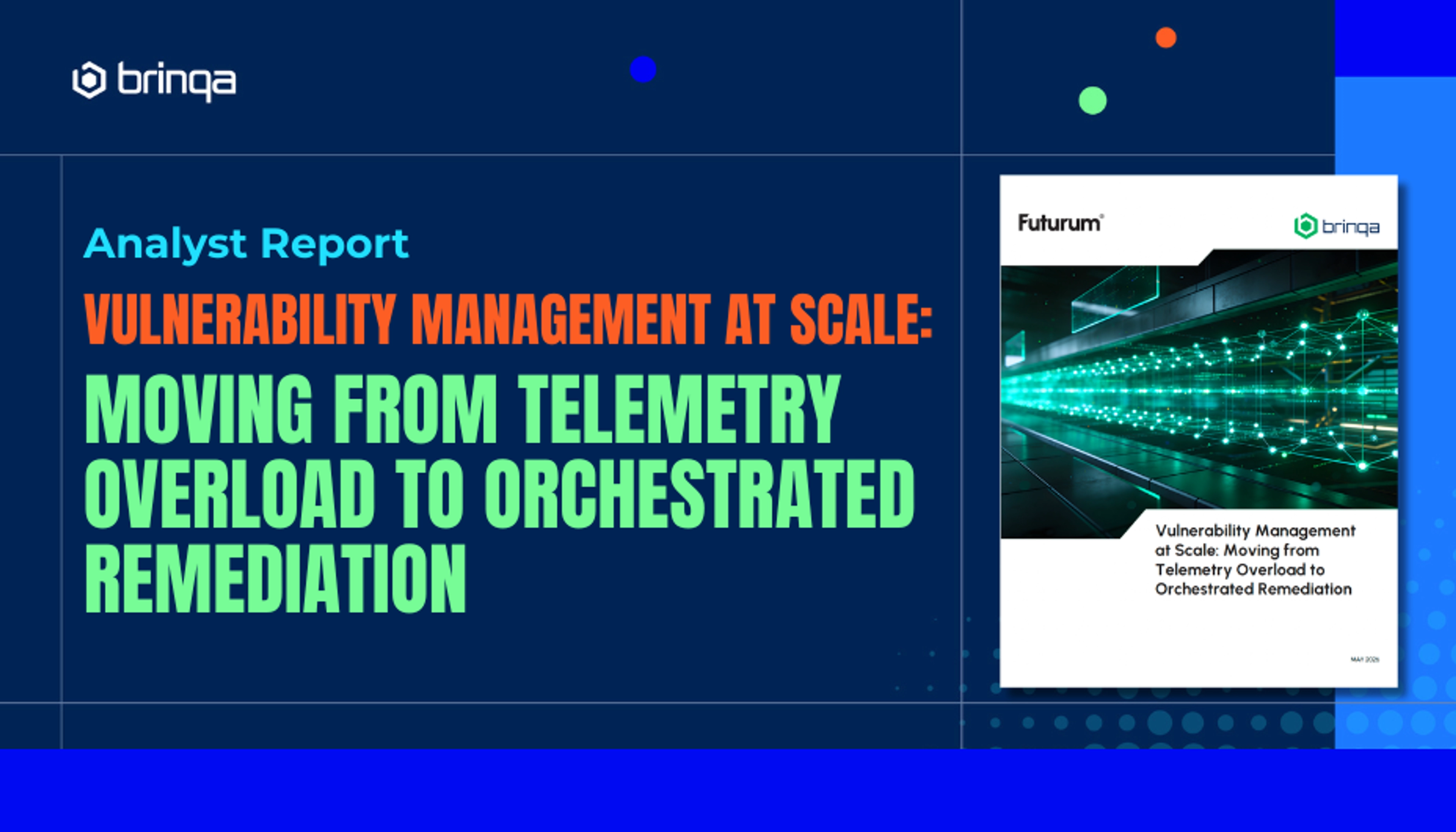
Analyst Report · Futurum Research · May 2026
The Gap Between Telemetry and Business Risk Is a Structural Problem
Analyst Report · Futurum Research · May 2026
The Gap Between Telemetry and Business Risk Is a Structural Problem
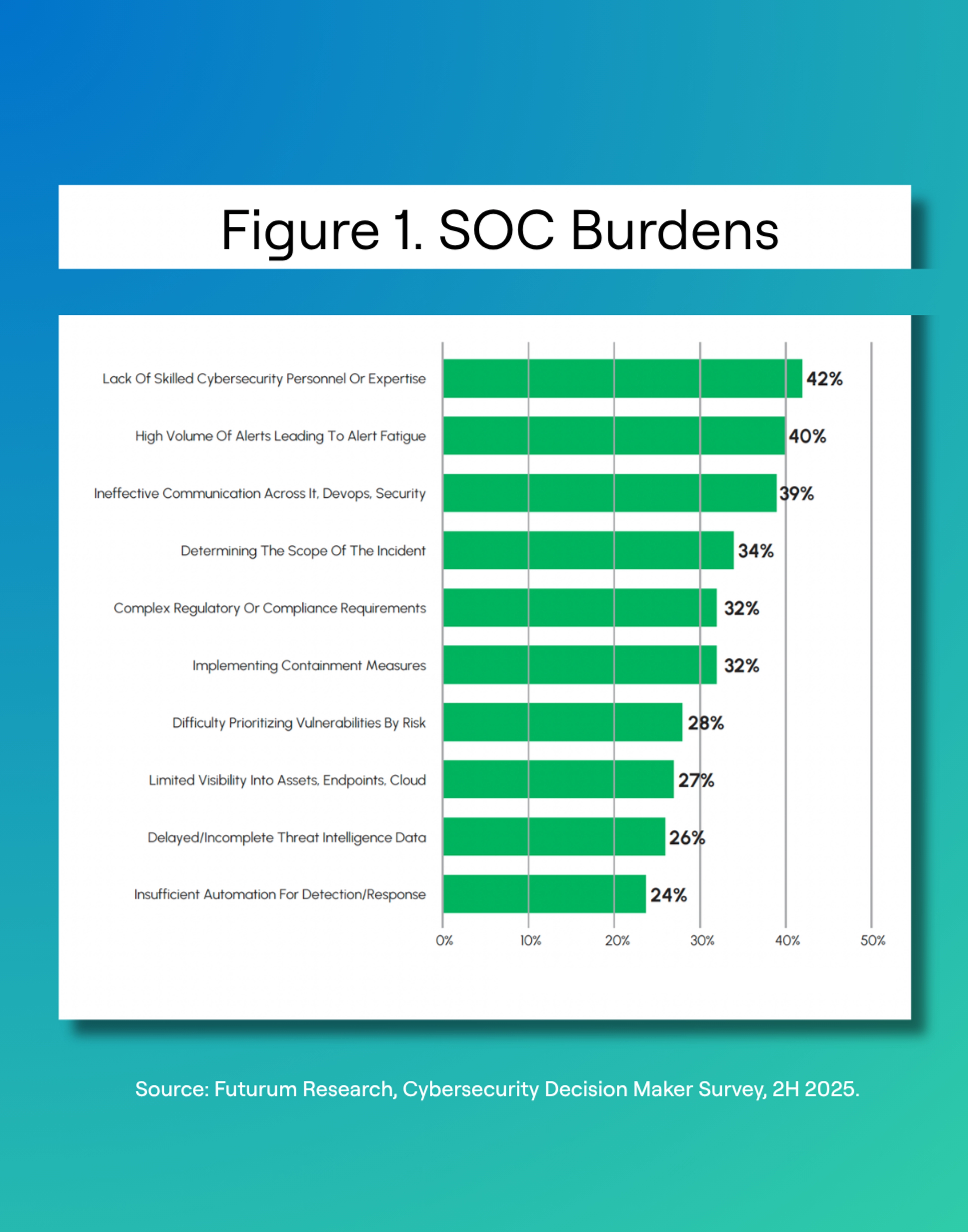
Ask any enterprise security team what's slowing them down and you'll hear some version of the same answer: the findings are there, but they're fragmented across tools, reported five different ways, and stripped of the business context that would tell you what to fix first. According to Futurum's 2H25 Cybersecurity Decision Maker Survey, alert fatigue ranks as the #2 operational burden for security teams — second only to a shortage of skilled personnel.
This independent Futurum Research report outlines the decision-making criteria security leaders need to evaluate their exposure management programs, and where Brinqa fits as the orchestration layer between detection and remediation.
Key Findings
What the Research Found
Three structural failures are holding enterprise vulnerability management programs back:

1. The Relationship Gap
Standard vulnerability platforms weren't built for complex relationship mapping. Graph-based architectures are now a key requirement of modern exposure management, not a differentiator.

2. The Integration Trap
When unified platforms don't exist, enterprises build their own data normalization engines. Futurum's survey found that integration complexity is the second-biggest challenge in evaluating new security offerings — and buyers prioritize integration over feature specialization by a 2:1 margin.

3. The Black Box Problem
AI-driven automation is required at modern telemetry scale. But automation without strict guardrails (user-defined confidence thresholds, verifiable audit trails, transparent deduplication logic) creates risk that's indefensible to the board.
Inside the Report
Inside the Report
The Futurum brief covers the strategic and operational decisions security leaders are facing as the market shifts away from basic vulnerability management toward contextualized, enterprise-wide exposure management. Specifically, it addresses:
- Why measuring "flaws found" is a legacy metric that fails to translate technical debt into financial risk
- How decoupling detection, analysis, and execution creates a more objective, scalable remediation engine
- What policy-based automation looks like in practice — and why it's the fastest path to enforcing MTTR SLAs
- How organizations can move toward Cyber Risk Quantification (CRQ) to make exposure reduction visible at the board level
- Where Brinqa sits in the exposure management stack — and how its graph architecture, 260+ native integrations, and AI guardrails align with Futurum's recommendations
Webinar · On Demand
Hear Directly From the Analysts Behind the Report
Join Fernando Montenegro from The Futurum Group and the Brinqa team for a live discussion of the report's findings — including where most organizations are getting stuck and what the path forward actually looks like in practice.