Five Things to Consider When Developing Proactive Exposure Management Programs
by James Walta, VP of Product//
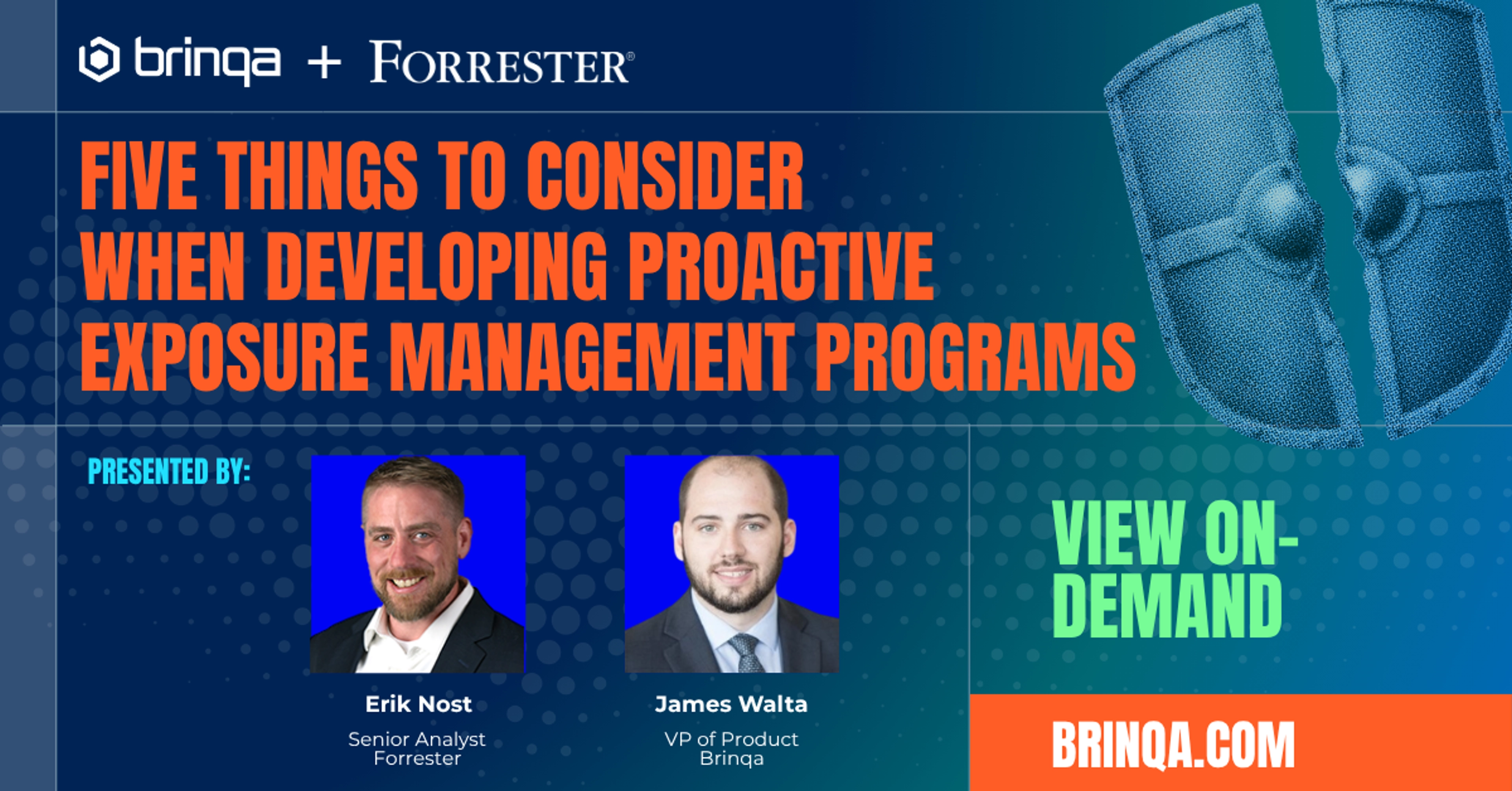
Join Brinqa and Forrester for a deep-dive into what it actually takes to reduce risk in 2026.
Security breaches don't happen because of a single unpatched vulnerability. They result from a chain of exploited exposures across fragmented tools, siloed data, and disconnected remediation workflows — leaving security leaders without the clarity they need at the exact moment it matters most.
In this fireside chat, Forrester Principal Analyst Erik Nost and Brinqa VP of Product James Walta unpack what it actually takes to shift from reactive, tool-by-tool vulnerability management to a proactive exposure management program — one that unifies visibility, sharpens prioritization, and closes the remediation gap at enterprise scale.
Featured Speakers


What You'll Learn
This conversation is built around five core areas drawn from the latest Forrester research and Brinqa's experience operationalizing proactive security across enterprise environments.
1. The Proactive Security Platform Landscape
The market has moved. Attack surface management and vulnerability risk management have converged into unified platforms — and the organizations still running them as separate programs are paying for it. Erik Nost shares what Forrester's research reveals about where this market is today, and what security leaders should be evaluating.
2. The Fragmentation Problem
Cloud, AI, and DevOps adoption didn't just add new risks — it multiplied the tools built to manage them. CSPM, CNAPP, DAST, SAST: each one generates data that lives in its own silo. The result isn't just noise. It's an inability to understand the real-world impact of any single exposure. This section breaks down why fragmentation is the root problem, and what a unified data model actually changes.
3. Prioritization That Reflects Real Risk
CVSS scores weren't designed to answer the question security leaders actually need answered: what do I fix first? Effective prioritization requires layering in attack path analysis, exploitability data, business context, and cyber risk quantification — and translating that complexity into decisions teams can act on. Erik and James walk through what that looks like in practice.
4. Closing the Remediation Gap
Opening a ticket is not remediation. True remediation means orchestrating the right fix, to the right owner, through the right workflow — and tracking it to completion. This section covers how proactive security platforms are evolving beyond ITSM integration to directly influence patch management, configuration controls, and engineering pipelines.
5. The Agentic AI Horizon
AI is already being applied to exposure management use cases — but the evolution isn't finished. The most important question isn't what AI can do. It's what data model it's working from. Erik and James address where AI genuinely adds value today, why the distinction between automated and autonomous remediation matters, and what security leaders should be asking before they invest.